

Canada SDS vs Non SDS 2026 (Which One Should You Choose?
5 March 2026Understanding Spinago Casino’s Game Selection and Providers
8 March 2026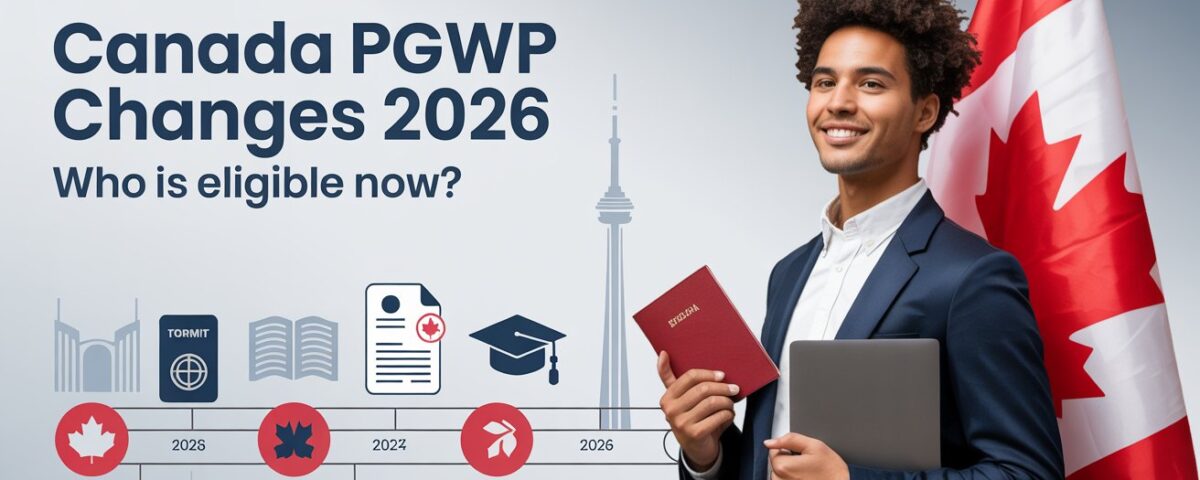
Canada’s always been a hotspot for international students, and honestly, a huge part of that comes down to the Post-Graduation Work Permit (PGWP). This permit lets you stick around and work in Canada after you graduate, which gives you real-world experience and, for a lot of people, is the first step toward permanent residency (PR).
But things have shifted lately. Between 2024 and 2026, the government rolled out some big changes to who can get a PGWP. Now, if you’re thinking about studying in Canada, you’re probably wondering — do I still qualify for a PGWP in 2026?
Let’s clear things up and get into what’s changed, what the current rules are, and what you need to know before picking a program.
What’s the PGWP, Anyway?
The PGWP (Post-Graduation Work Permit) is an open work permit. If you’re an international student and you finish your studies at a Canadian school, you can work for pretty much any employer in Canada.
How Long You Can Work After Graduation
How long you get to work depends on your program:
If your studies lasted at least 8 months but less than 2 years
Your PGWP matches your program length.
If your program was 2 years or longer
You can get up to 3 years on your permit.
For all the official details, check the Government of Canada website (IRCC – Immigration, Refugees and Citizenship Canada).
Basically, IRCC says you need to finish a full-time program of at least 8 months at a Designated Learning Institution (DLI) to even be considered for a PGWP.
What’s Changed About the PGWP?
Canada’s tightened up the rules to make sure international education lines up with real job market needs, and to crack down on people taking advantage of the system.
These changes started in late 2024 and are continuing through 2026.
Here’s what you need to know.
1. Field of Study Rules for Some Programs
This is a big one.
Now, some students only qualify for a PGWP if their program matches jobs where Canada actually needs workers.
This mostly affects non-degree programs, such as:
College diplomas
Certificate programs
Vocational training programs
If you’re in a Bachelor’s, Master’s, or PhD program, you’re usually in the clear. The field-of-study rule generally does not affect degree programs.
Fields That Are Usually Eligible for PGWP
Healthcare
Engineering
Skilled trades
Technology (Tech)
Agriculture
Construction
Transport and logistics
These are areas where Canada currently needs more workers.
2. The List Isn’t Changing in 2026
Worried the rules will change while you’re studying?
The government says the PGWP-eligible fields list is frozen for 2026.
This means:
No new fields will be added
No existing fields will be removed
So, if you pick a program that’s eligible now, it should stay eligible through 2026.
3. You Need a Language Test
Starting November 1, 2024, most people applying for a PGWP must show valid language test results (English or French) when they apply.
Accepted tests include:
IELTS
CELPIP
PTE Core
TEF Canada
TCF Canada
Your language test results must still be valid when you submit your PGWP application.
4. Stricter Rules for Some College Partnerships
There are tougher rules now for public-private partnership programs (PPP programs) that some colleges offer.
Most PPP programs are no longer eligible for PGWP, especially if:
The program is delivered at a private partner campus
The program does not align with Canada’s labour market needs
The goal is to make sure PGWP benefits only go to graduates from regulated and recognised programs.
5. Limits on Distance Learning
You can’t simply study online from another country and expect to qualify for a PGWP anymore.
Most of your program must be completed inside Canada.
If too much of your program is completed online or through distance learning, you risk losing PGWP eligibility.
The idea behind this rule is simple: Canada wants students to gain real classroom exposure and Canadian work experience.
PGWP Eligibility in 2026 – What You Need
If you want a PGWP in 2026, here’s what you need.
1. Study at a Designated Learning Institution (DLI)
Your school must be officially recognised.
It cannot be just any college or institute. It must be approved to host international students in Canada (Designated Learning Institution – DLI).
2. Complete an Eligible Program
You must complete a full-time program that:
Lasts at least 8 months
Ends with a degree, diploma, or certificate
Shorter programs do not qualify for PGWP.
3. Graduate from a PGWP-Eligible Field (If Required)
If you are studying a non-degree program, make sure your field of study appears on the government’s eligible list.
Degree programs such as:
Bachelor’s
Master’s
PhD
are generally not affected, but it is always wise to double-check before enrolling.
Final Thoughts (PGWP in 2026)
That’s the current situation for PGWP eligibility in 2026.
The bottom line is simple.
Check that your college is a DLI.
Make sure your program is PGWP eligible.
Be prepared for the new language test requirement.
If you do these things, you’ll be in a strong position to take advantage of the PGWP and the opportunities it opens up in Canada, including valuable work experience and potential pathways toward permanent residency.
